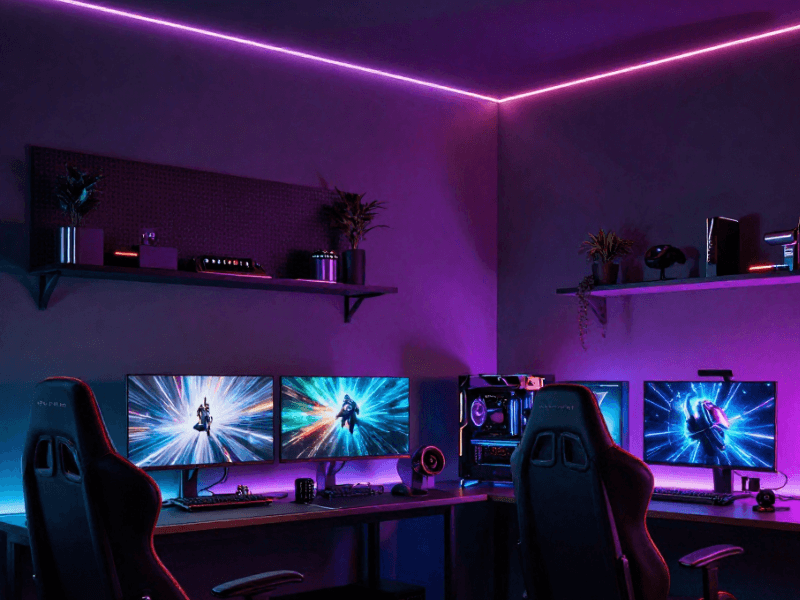
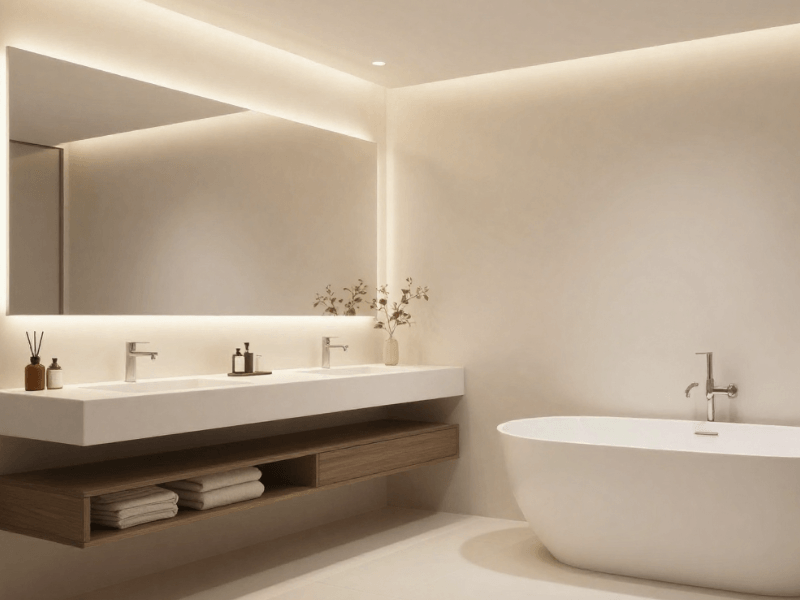
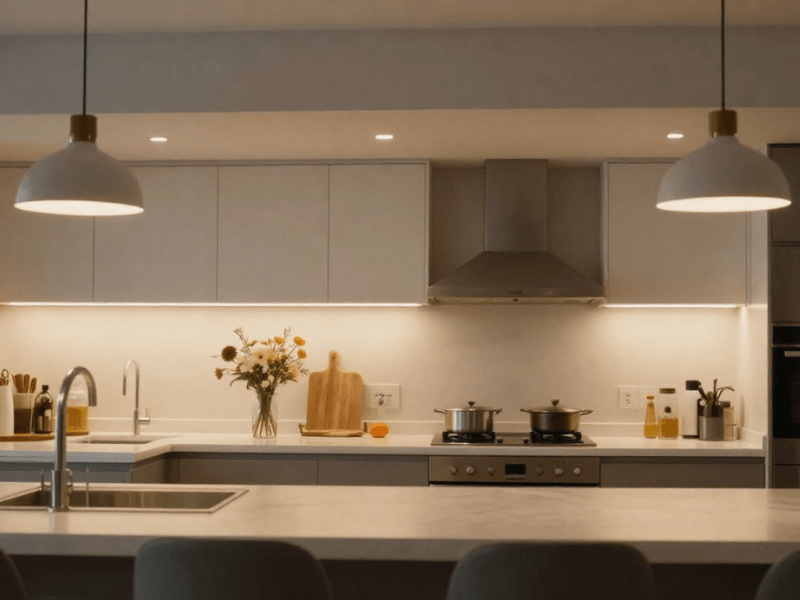
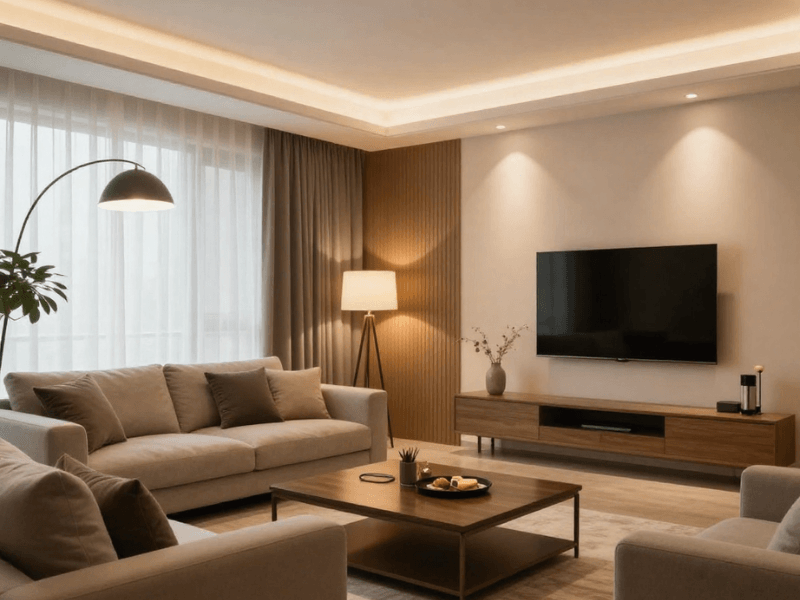
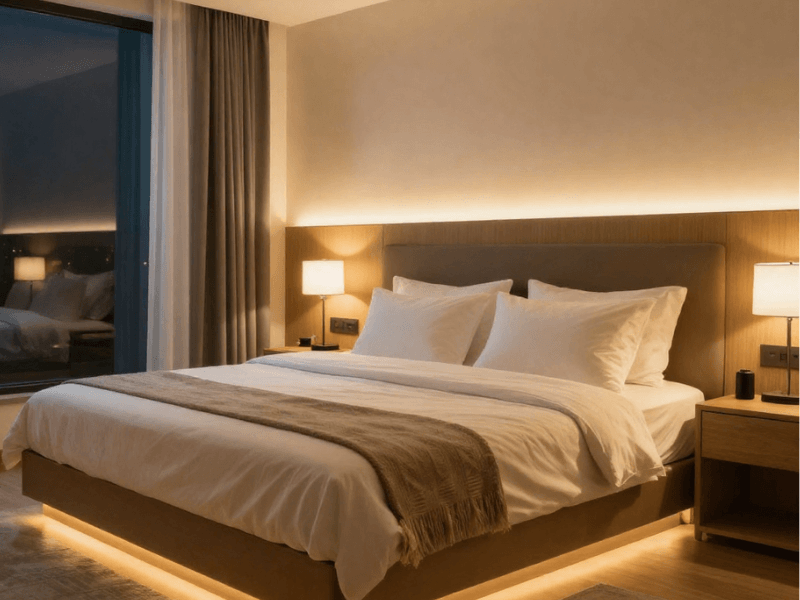
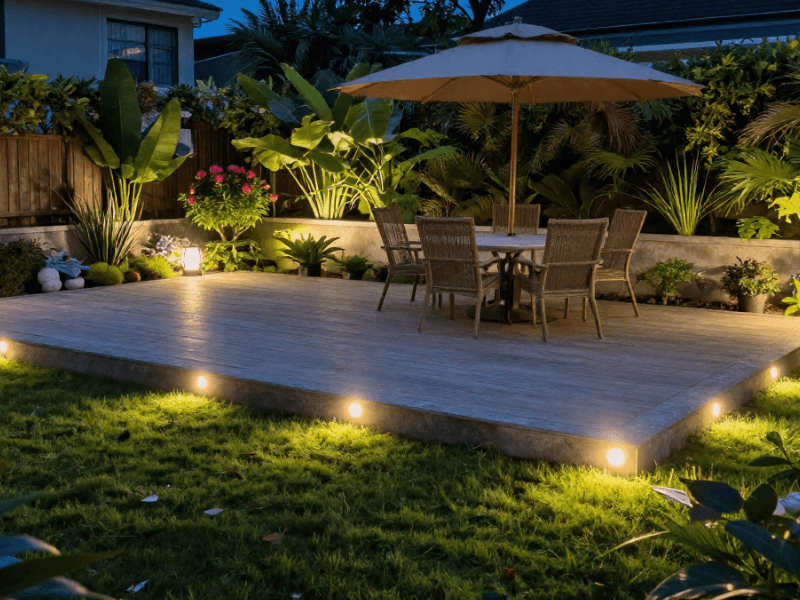
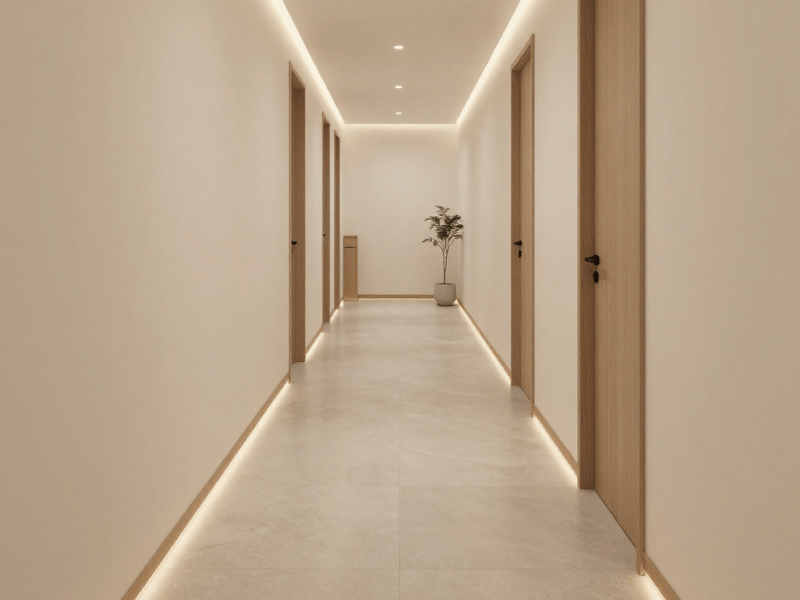

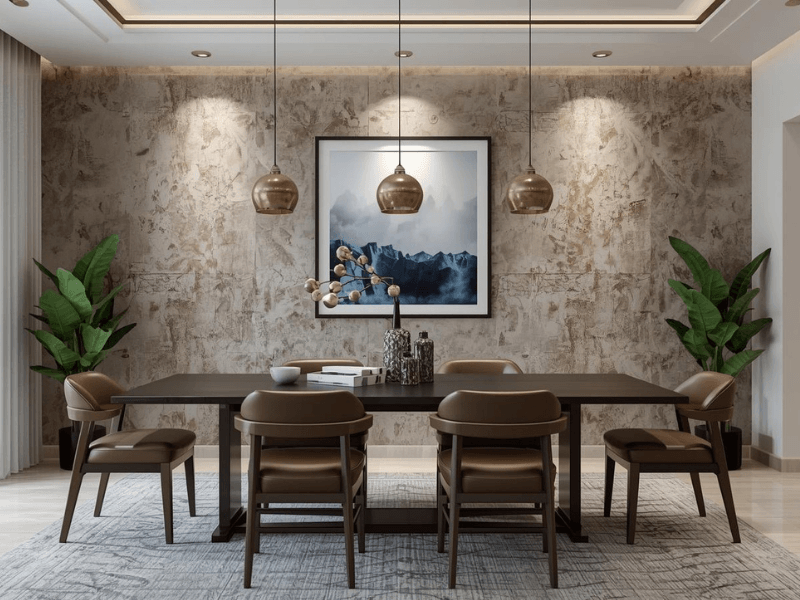

It’s 2026, and living rooms aren’t the same as they were a few decades ago. This change is evident in living room lighting. Current trends are no longer focused purely on aesthetics.
Yes, stylish fixtures still matter, but homeowners are now choosing lighting that improves comfort, flexibility, wellbeing, and energy efficiency. The goal is no longer just to create the Instagram-perfect space that will look good for five minutes. It is about designing a room that feels good from morning coffee to late-night films.
How lighting is used has changed in modern UK homes. Instead of relying on a single central ceiling light or downlights to do everything, living rooms are becoming carefully layered environments in which lighting adapts throughout the day.
Smart controls, warm white tones, hidden LED strips, and adjustable brightness levels… Any of these sound familiar? They are now considered essentials rather than luxury extras. That’s why living rooms in 2026 feel calmer, smarter, and far more personal. And in this post, we’re diving into the trends shaping living room lighting.
Why 2026 Lighting Trends Are About Lifestyle, Not Just Style
For years, lighting trends were driven mainly by appearance. Like most trends, phases have come and gone: industrial pendants, oversized chandeliers, and ultra-modern spotlights.
All these trends are driven by one thing: Simply because they’re fashionable. In 2026, the conversation has changed completely. Today, lighting trends are shaped by lifestyle needs. The one place this holds true is in modern living rooms. These spaces often serve multiple purposes throughout the day, especially as hybrid living becomes more common.
One corner may act as a home office in the afternoon and become a cosy reading area at night. The same room may need bright lighting for entertaining guests one evening and soft ambient lighting for relaxing the next.
Because of this, homeowners are prioritising lighting that supports different moods and activities rather than sticking to a single fixed setup, otherwise called layered lighting.
Comfort has also become a major influence. People have become more aware of how light affects sleep, mood, and eye strain, so the use of harsh lighting in modern living rooms has decreased. Instead, there is growing demand for softer, adjustable lighting schemes that feel more natural and calming.
Personality in Lighting
At the same time, personalisation has become a huge part of interior design. People want more control over how their space looks and feels. Smart lighting scenes, dimmable LEDs, and colour temperature (CCT) adjustments are some of the ways to modify lighting to your preferences.
In 2026, lighting has shifted from being a static element in your living room to becoming an adaptable tool that quietly shapes your space.
Trend #1: Human-Centric Lighting
It may sound technical, but it’s actually a pretty straightforward concept:
Lighting should support the way our (human) bodies naturally respond to light throughout the day. Rather than using the same harsh brightness from morning until midnight, modern lighting systems now mimic natural daylight patterns to create a healthier and more comfortable environment.
Tunable White Lighting for Day-to-Night Living
Tunable white lighting is becoming increasingly popular in living rooms because it allows homeowners to adjust colour temperature depending on the time of day.
Natural white lighting (typically around 4000K) creates a brighter and more energising atmosphere. This makes it ideal for daytime activities. For more detail-heavy work, cool white light (6500K+) will be ideal. Warmer white lighting (2700K to 3000K), on the other hand, creates a softer and more relaxing feel. In the evening, this warmer glow helps the room feel calm and inviting.
With tunable lighting, you can achieve all of these with only one fitting; no need to change or install multiple fixtures. Think of this as your living room’s own circadian rhythm.
Wellness-Focused Lighting Design
Modern lighting goes beyond just producing usable light as wellness becomes its centre.
Instead of blasting a room with direct overhead lighting, designers are using softer, more indirect techniques to reduce glare and eye strain. LED strips hidden in coving, wall washing effects, and diffused lighting all help create a gentler environment that feels easier on the eyes.
In homes where people spend long hours looking at screens, this trend is especially beneficial.
Trend #2: Layered Minimalism (Less Fixtures, More Impact)
Minimalist interiors remain popular in 2026, but lighting design has evolved beyond empty-looking spaces with a single pendant light dangling sadly in the middle of the ceiling. The modern approach? Layered minimalism.
The idea is not to add more fixtures, but rather to create depth and atmosphere by strategically combining different light sources.
Hidden Lighting as a Design Feature
You see it everywhere, yet you don’t.
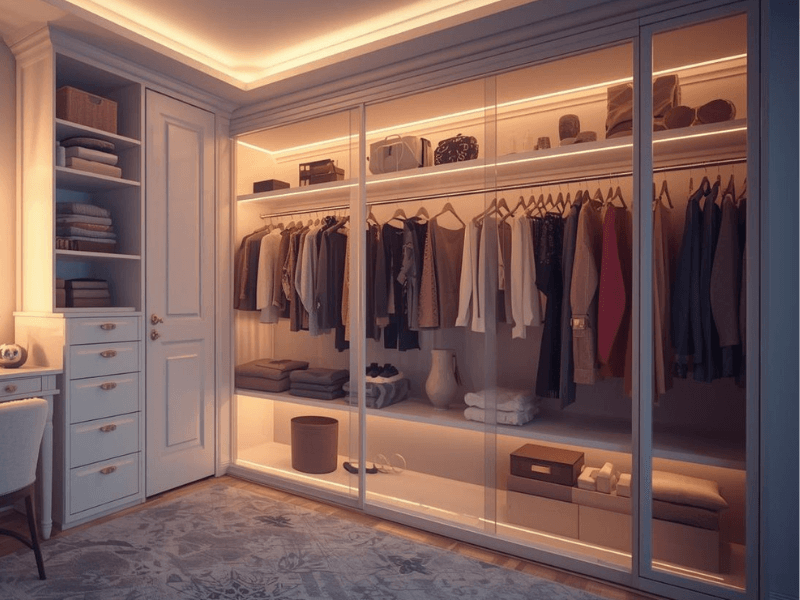
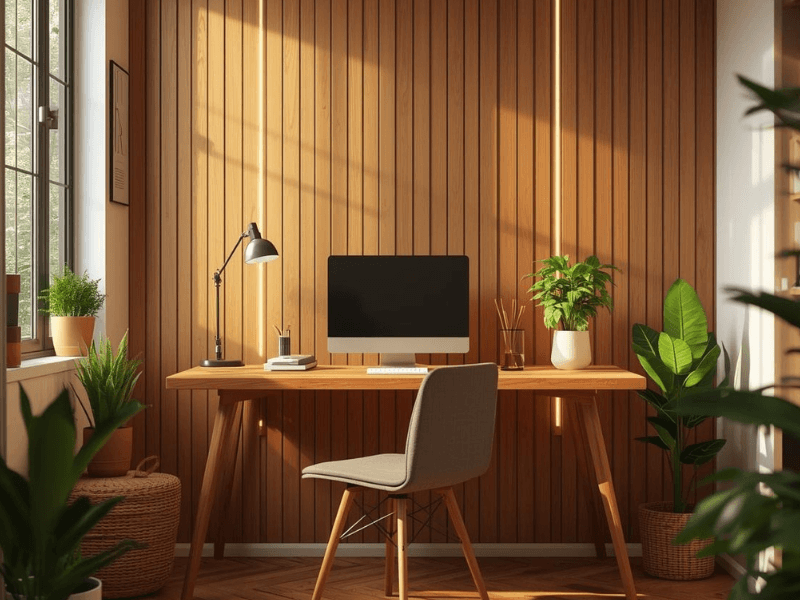
You can now find LED strip lights inside most ceiling coving, underneath floating shelves, or behind televisions, creating a subtle glow that adds depth to any space. The effect? Sleek, modern, and surprisingly luxurious lighting effect.
Because the light source itself is hidden, the room feels softer and cleaner. It can be likened to a whisper rather than a shout.
Statement Pieces with Purpose
While minimalist design favours simplicity, statement lighting still plays an important role. But how is it different in 2026?
Today, statement fixtures are chosen more carefully. Instead of filling a room with multiple decorative lights, homeowners are opting for one or two standout pieces that combine style with functionality.
Large pendants, sculptural ceiling lights, or elegant floor lamps can act as focal points while providing practical illumination without breaking the balance of the space. The emphasis is on balance.
Pro Tip: A bold fixture should enhance the room rather than overwhelm it.
Trend #3: Smart Lighting Becomes Standard
A few decades ago, smart lighting was considered by many as a futuristic upgrade. In 2026, it’s expected to be part of modern home design. With smart home ecosystems, lighting is becoming more connected, automated, and convenient.
App and Voice-Controlled Lighting Systems
If you haven’t tried using apps and voice assistants to control your lights yet, then you’re missing out.
With modern smart lighting systems, you can adjust brightness and colour temperature, set schedules, and create scenes directly from your phone or through voice assistants like Google and Alexa. It’s flexible. It’s convenient.
Instead of getting up to switch lights off manually, you can just issue commands with a tap or a simple spoken phrase. Smart systems can also automate lighting schedules throughout the day, helping rooms transition naturally between daytime brightness and evening relaxation.
Integration with wider smart home systems is another major trend. Lighting can now work alongside blinds, entertainment systems, and heating controls to create a fully connected living environment.
Scene Setting for Different Activities
A popular smart lighting feature is the ability to create (and use) scenes. Rather than adjusting every light individually, you can create preset scenes designed for different activities. Some examples:
-
A “movie night” scene: The main lights dim as soft LED backlighting activates.
-
A “reading” scene: Floor lamps brighten near the sofa
-
A “hosting” scene: Balanced ambient lighting is created across the room
With a simple tap on your smartphone or a voice command, your lights instantly adapt to any activity in your living room.

Trend #4: Warm Neutrals and Soft Glow Finishes
It’s time to say goodbye to the cold, blue-toned lighting that dominated many modern interiors. 2026 is all about warmth… and living rooms that feel inviting, comfortable, and calming.
The Rise of Warm White Lighting (2700K-3000K)
Warm white lighting has become the preferred choice for modern living rooms. We’re talking colour temperatures between 2700K and 3000K. These lights create a soft, golden glow that feels calmer, more welcoming, and more inviting.
This is particularly popular for interior designs featuring beige tones, textured fabrics, and natural wood finishes. Cool white light still has its place, though, but more in the kitchen and workspaces.
Diffused and Glare-Free Lighting
Comfortable lighting is glare-free lighting. That’s why frosted diffusers, opal covers, and indirect lighting techniques are staples in modern living room lighting.
Using either of these creates a more relaxing environment while improving visual comfort during activities like watching television or reading. Yet another sign that lighting trends are becoming more focused on how spaces feel rather than simply on how they look.
Trend #5: Sustainable and Energy-Efficient Lighting
With the dawn of LED lighting, sustainability trends have continued to evolve. Homeowners continue to seek lighting solutions that reduce energy consumption, last longer, and produce less waste. And we’re not stopping.
LED Dominance in Modern Homes
Modern residential lighting now consists entirely of LED lights. Compared with traditional lighting technologies, LEDs are far superior in energy use, light output, and lifespan. The result is reduced electricity bills and replacement costs.
Many LED lights are also compatible with brightness control, colour temperature adjustment, and smart integration. Used in layered lighting setups, LEDs deliver the best effect and energy efficiency for your living room.
Conscious Lighting Choices
Consumers are now becoming more selective about the fixtures they buy. Rather than choosing cheap fittings that need frequent replacement, many homeowners are investing in higher-quality lighting designed to last longer.
-
Durable materials
-
Timeless finishes
-
Modular designs
These are all becoming increasingly important factors for living room lights. Short-lived trends are not for the modern homeowner. Fewer but better pieces that continue working well for years are.
Trend #6: Multi-Functional Lighting for Flexible Spaces
Your living room wears many different hats. That’s why lighting flexibility has become essential. Modern lighting must now adapt to different activities throughout the day without requiring a full renovation.
Lighting for Work-from-Home Setups
Since the boom of hybrid work, many people have turned their living rooms into temporary workspaces. Because of this, task lighting is becoming more integrated into living room design.
Adjustable floor lamps, directional wall lights, and focused table lamps help provide better visibility for work without disrupting the room’s overall atmosphere.
The key is balance. Work lighting should feel functional during the day but still blend naturally into the room once your laptop closes.
Adaptable Lighting Layouts
We’ve already touched on this earlier, but lighting in 2026 needs to be adaptable. That means dimmable lights, movable lamps, adjustable fittings, and flexible LED systems. All these help modify the room’s lighting as needed at a moment’s notice.
People are now learning not to rely on a single lighting arrangement. Many now want lighting that can evolve with different routines and activities.
How to Apply 2026 Lighting Trends in Your Living Room
After going through all these lighting trends, you might be thinking: “Oh no, my living room needs a renovation.” No, not even a little bit.
The beauty of lighting is that it’s the simplest (and relatively cheapest) upgrade you can add to your living room, yet it’s the most impactful. And did I mention there’s no need for a total renovation?
Start with a Lighting Plan
You know your living room like the back of your hand. But have you sketched it out to get an overview of the different zones?
-
Relaxing areas
-
TV viewing areas
-
Reading nooks
-
Workspaces
-
Social or entertaining spaces
Make these zones clear, and choosing the right combination of lights (ambient, task, and accent lighting) will be easy.
Combine Trends for a Balanced Look
None of these lighting trends is a one-size-fits-all. Good lighting is usually a culmination of multiple ideas that work together. That’s not to say that when you combine two ideas, they’ll work. You need to strike a balance among comfort, function, and aesthetics.
Upgrade Without a Full Renovation
Many of these lighting trends can be introduced to your existing lighting setup without major renovations. Some of the upgrades include:
-
Switching to warm white LED bulbs
-
Adding smart plugs or smart bulbs
-
Installing LED strip lighting behind TVs or shelving
-
Replacing harsh ceiling lights with dimmable alternatives
-
Adding floor or table lamps for layered lighting
These simple changes can dramatically improve how the room feels without requiring a wall or part of the ceiling to be broken down.
Common Mistakes to Avoid When Following Lighting Trends
- Not considering how the room functions. A beautiful lighting setup that does not meet a space's needs quickly becomes frustrating.
- Overusing cool white lighting. While bright white tones are useful for detail-heavy tasks, they can make living rooms feel cold and uncomfortable, especially during evenings.
- Ignoring dimming options. This limits flexibility. Even the best lighting design benefits from adjustable brightness levels that adapt throughout the day.
- Poor placement of accent lighting. LED strips or wall lights placed incorrectly can create glare, uneven shadows, or a cluttered look. Plan out your layout properly for a clean finish.
Pro Tip: You don’t get good lighting by accident. Everything should be well thought out.

Designing a Future-Ready Living Room
Living room lighting trends in 2026 are more about people’s well-being than aesthetics. Lighting has shifted from being a decorative element to becoming a core component in creating flexible spaces that feel comfortable, adaptable, and personal.
Nowadays, there’s more focus on improving atmosphere as much as appearance. Because the best lighting designs are the ones that enhance the daily lives of everyone around them.
If you’re ready to jump on board the latest living room lighting trends, explore the latest LED strips, smart lighting solutions, dimmable fittings, and other LED options at Simple Lighting.
More insights also await in our Living Room Lighting Ideas: The Complete Guide page!


0 comments